Category: About Pure Matrimony

  • What Does a Typical Profile Look Like on Pure Matrimony?

    What Does a Typical Profile Look Like on Pure Matrimony?

    What Information Is Included in a Pure Matrimony Profile?

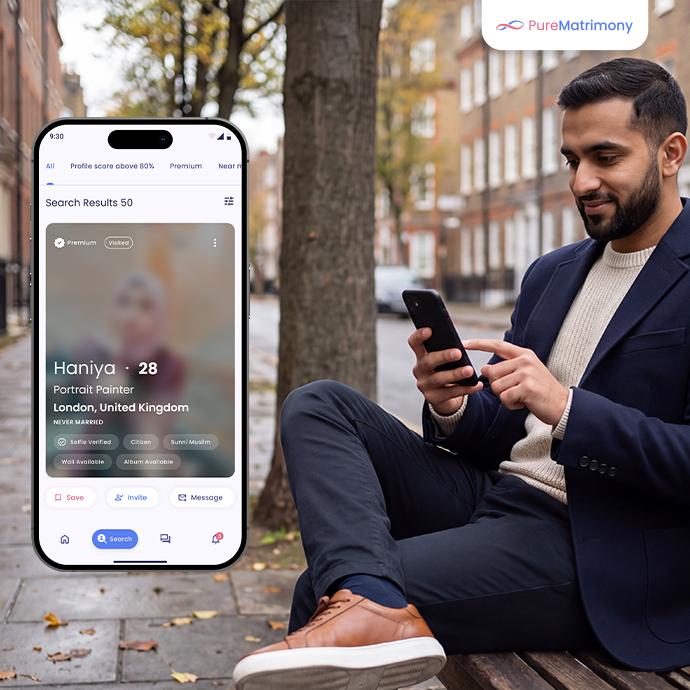
    A Pure Matrimony profile can bring together personal information, religious practice, lifestyle, values, and marriage-related expectations in one place.

    Profile details cover:

    • Personal and family background
    • Religious practice and observance
    • Lifestyle and values
    • Marriage expectations
    • Partner preferences
    • Future plans
    • Family goals
    • Photographs and video
    • Education and occupation
    • Location and other relevant personal details

    Not every detail necessarily appears in exactly the same format for every member. 

    The available information depends on what the member provides and which areas of the profile they complete.

    The purpose is to provide context before a conversation begins, rather than making a photograph the main basis for consideration.

    Does a Profile Show Family and Future Goals?

    Family and future goals can provide valuable context because marriage involves building a life together, not simply finding someone with similar interests.

    Pure Matrimony describes future plans and family goals as essential information that appears within its detailed profiles.

    This can help potential spouses think about questions that become important later in the process.

    For example:

    • What kind of family life does this person want?
    • What are their long-term priorities?
    • What role does their Deen play in their future plans?
    • Are their expectations around family broadly compatible with mine?

    These questions cannot all be answered from a profile.

    But knowing where someone stands can help determine which questions should be explored in a conversation.

    What Does a Typical Profile Tell You About the Person?

    A profile should give you enough context to decide whether someone is worth getting to know further, but not enough information to make a final marriage decision.

    Think of it as an opening picture rather than the complete story.

    A profile may tell you that someone:

    • Shares your approach to practising Islam
    • Has compatible lifestyle expectations
    • Wants a similar type of family life
    • Lives somewhere suitable for your circumstances
    • Has broadly compatible future goals

    But it cannot fully demonstrate someone’s character.

    You still need meaningful conversations, appropriate questions, and careful consideration before deciding whether a marriage proposal should progress.

    The distinction matters because a detailed profile should improve the starting point of the spouse search, not create false certainty.

    What Might a Sample Pure Matrimony Profile Look Like?

    A simplified example might combine personal information with religious practice, lifestyle, and marriage expectations to provide a broader picture of the member.

    Here is an illustrative example. 

    Example Profile

    Age: 29
    Location: Birmingham
    Occupation: Healthcare professional
    Education: University-educated
    Religious practice: Practising Muslim
    Lifestyle: Values family life, regular worship, personal development, and a balanced routine
    Marriage goals: Looking to build a stable Muslim household
    Family goals: Interested in raising children with a strong Islamic foundation
    Spouse expectations: Seeking someone serious about their Deen, family responsibilities, and personal growth
    Future plans: Open to discussing relocation and long-term family goals where appropriate

    Notice what this example does not do.

    It does not try to make the person sound perfect.

    It gives enough information to create context for a serious marriage conversation.

    Should You Judge Someone Based on Their Profile Alone?

    No. A profile should help you decide whether to explore an introduction, not determine someone’s suitability for marriage by itself.

    Written information is self-reported.

    People can describe themselves accurately, vaguely, or differently from how they behave in real life.

    That is why the profile should be treated as the beginning of the evaluation process.

    Look for meaningful alignment, then use appropriate conversations to understand the person more deeply.

    A strong profile can make these conversations more focused.

    It cannot replace them.

    What Makes a Profile Useful for Marriage?

    The most useful profile is one that provides enough honest information for another person to understand what matters about you as a potential spouse.

    A profile should not be treated as a marketing exercise.

    Trying to make yourself appeal to everyone can make your profile less useful to the person who is actually compatible with you.

    Instead:

    1. Be accurate.
    2. Give meaningful context.
    3. Explain what matters to you.
    4. Be honest about your marriage expectations.
    5. Present your religious practice clearly.
    6. Avoid making promises about yourself that your actions cannot support.

    The aim is not to attract the largest possible number of people.

    It is to give the right person enough information to recognise that there may be a meaningful reason to talk.

    Read More: How to Recognise a Fake Profile on a Muslim Marriage App

    A Profile Is the Beginning, Not the Decision

    A typical profile can make the early stages of spouse discovery more informed. 

    Pure Matrimony encourages adding specific details to the profile so members can approach introductions with greater context. 

    Are you ready to present yourself honestly and search with purpose?

    Create Your Free Profile Now

    Final Thoughts

    A typical Pure Matrimony profile is intended to provide more meaningful context than appearance alone.

    It brings together the information that can help potential spouses decide whether an introduction appears worth exploring.

    But no profile can tell you everything about another person.

    Marriage requires meaningful conversation and careful consideration.

    The best profile is therefore not the one that makes someone look perfect.

    It is the one that gives an honest picture of who they are, what they value, and what they hope to build through marriage.

  • 5 Reasons It’s Worth Trying an App After a Bad Experience

    5 Reasons It’s Worth Trying an App After a Bad Experience

    1. Your Previous Experience May Have Highlighted What You Actually Need

    A frustrating experience can help you understand what matters most in your spouse search.

    Many people leave matrimonial apps because they encounter things they were not expecting:

    • Conversations without clear marriage intentions
    • People who are not ready for commitment
    • Too much focus on first impressions rather than values
    • Difficulty finding someone who shares similar priorities

    While these experiences can be discouraging, they can also provide clarity.

    You may realise that you need:

    • A more marriage-focused environment
    • Greater alignment around Islamic values
    • Clearer expectations from potential matches
    • A process that supports intentional conversations

    Instead of viewing the experience as a reason to stop searching, use it to become more selective about where you continue your journey.

    Read More:

    2. Not Every Marriage App Creates the Same Experience

    Different platforms attract different types of users and encourage different approaches to finding a spouse.

    A common mistake is assuming that every app works in the same way.

    Some platforms prioritise reaching the largest possible audience.

    Others focus on creating a more specific marriage environment.

    This difference affects:

    • The type of people you meet
    • The conversations you have
    • The expectations users bring
    • How seriously people approach the process

    A platform designed around marriage will naturally attract people who are approaching the search with that same goal.

    The environment you choose matters because it shapes the quality of your experience.

    Read More: Feature by Feature: Where Pure Matrimony Takes a Different Approach

    3. A Better Search Starts With Clearer Intentions

    Returning to apps with a clearer approach can completely change your experience.

    A previous disappointment may have happened because you entered the search without defining what you were looking for.

    Before starting again, consider:

    • What qualities are genuinely important in a spouse?
    • What role should Deen play in your marriage?
    • What conversations do you need to have early?
    • What expectations are non-negotiable?

    Having clarity does not mean expecting perfection.

    It means understanding what compatibility looks like for you.

    When you know what you are seeking, it becomes easier to recognise suitable opportunities and avoid spending time in conversations that are unlikely to progress.

    4. Look Beyond Profiles and Focus on Marriage Potential

    A successful spouse search requires looking beyond first impressions and understanding whether someone is suitable for marriage.

    Online search can sometimes encourage people to focus heavily on quick judgments.

    However, marriage requires more than initial attraction.

    Important areas to consider include:

    • Religious values
    • Character
    • Family expectations
    • Communication style
    • Future goals
    • Approach to married life

    A trustworthy platform should support a process where people can learn about each other with seriousness and respect.

    5. Your Next Experience Can Be More Intentional

    Trying a Muslim marriage app again can be worthwhile when your approach and your platform choice are more aligned.

    Many Muslims return to online search because they still believe it can provide access to suitable spouses, but they approach the process differently.

    They focus on:

    • Quality over endless options
    • Clear intentions over casual conversations
    • Shared values over surface-level preferences
    • Marriage readiness over temporary interest

    A previous experience does not have to define your next one.

    The difference often comes from choosing a platform that better reflects the type of marriage you are trying to build.

    Why Choosing the Right Platform Matters

    The platform you choose can influence the type of spouse search experience you have.

    If your previous experience felt disconnected from your values, it may be worth exploring an environment built around a different approach. A better approach.

    Pure Matrimony was created for practising Muslims seeking a more focused path towards marriage, where Islamic values and serious intentions remain central. 

    Search Smarter This Time

    Final Thoughts

    A disappointing experience on a Muslim marriage app can make you question whether online matchmaking works.

    But one experience does not represent every platform or every opportunity.

    The key is learning from what happened, understanding what you need, and choosing an environment that supports your approach to marriage.

    The right spouse search is not about having endless options.

    It is about finding the right environment to meet someone who shares your values and intentions.

  • Culture or Islam? How to Verify Marriage Rules Before Nikah

    Culture or Islam? How to Verify Marriage Rules Before Nikah

    When Did “Our Way” Become a Religious Rule?

    A practice does not become a religious obligation simply because it has been followed by a community for a long time.

    Tradition can be meaningful. Families may have customs surrounding weddings, introductions, gifts, celebrations, housing, or family involvement. 

    None of that automatically makes a practice obligatory in Islam.

    This is where language matters.

    There is a major difference between:

    “This is how our family normally does it.”

    and:

    “Islam requires you to do this.”

    The second statement requires religious evidence.

    The Quran repeatedly directs Muslims towards what Allah has commanded rather than allowing people to invent religious requirements. 

    Allah warns against declaring something lawful or unlawful without knowledge. Quran 16:116

    That principle is particularly important in marriage.

    A single Muslim should therefore be comfortable asking:

    “What is the evidence for this being required?”

    That question is not an attack on tradition.

    It is an attempt to distinguish tradition from revelation.

    A Five-Question Test for Marriage Expectations

    Before accepting a marriage expectation as religiously binding, ask five questions about its source and status.

    1. What Exactly is Being Claimed?

    Is someone saying:

    • “You must do this.”
    • “You should do this.”
    • “Our family prefers this.”
    • “This is customary.”

    Those statements do not carry the same religious weight.

    2. Where is the Evidence?

    Ask whether the person can identify a relevant verse from the Quran or Hadith.

    If no evidence is offered, do not automatically assume the claim is Islamic.

    3. Does the Evidence Actually Address this Situation?

    Finding a verse or Hadith that mentions marriage does not automatically prove that it establishes the particular rule being claimed.

    The evidence needs to support the specific point.

    4. Is This an Obligation or a Preference?

    Something can be recommended without being obligatory.

    Something can also be permissible without being recommended.

    Using the wrong category can create unnecessary pressure.

    5. What Do Qualified Scholars Say?

    If the question concerns a detailed Islamic ruling, especially one affecting the validity or rights of a marriage, seek guidance from a qualified scholar or a community Imam rather than relying on a social media post, family message, or search result.

    This five-question process helps you investigate before you accept.

    Marriage Rules People Commonly Assume Are Islamic

    Some marriage expectations are often presented as religious requirements when they may actually involve custom, preference, or a matter requiring qualified scholarly guidance.

    Examples can include expectations about:

    Wedding Arrangements

    A particular style of ceremony, decoration, clothing, food, or sequence of events may be customary rather than an Islamic requirement.

    Living Arrangements

    Families may have strong views about where newly married couples should live. 

    Whether a particular arrangement is required involves questions of rights and responsibilities and should not simply be decided by custom.

    Financial Expectations

    Families can develop expectations around wedding spending, gifts, or who pays for particular events. These should not automatically be described as religious obligations.

    Gender Roles

    Islam establishes responsibilities within marriage, but not every household preference about decision-making or daily routines should automatically be labelled a religious rule.

    Ethnicity

    A family may prefer someone from a certain ethnic or national background. That preference should not automatically be presented as a religious requirement.

    These examples do not mean every such issue is merely cultural. Some matters have genuine Islamic guidance attached to them.

    The point is simpler:

    Do not confuse a family expectation with a religious ruling without checking the evidence.

    What Happens When Preference Is Presented as Obligation?

    When personal preference is presented as religious obligation, it can create pressure and make legitimate choices appear religiously forbidden.

    Consider a family saying:

    “A proper Muslim wedding must happen this way.”

    That statement may make someone feel that choosing differently means compromising Islam.

    But if the practice is actually a family preference, the person is now carrying religious guilt over something that may not have religiously binding status.

    The opposite problem can happen too.

    Someone may dismiss an authentic Islamic obligation simply because it conflicts with what they personally prefer.

    Both errors come from the same failure: not separating evidence from assumption.

    For singles, learning this difference before marriage can help them make decisions with confidence and less pressure.

    Read More: Does Age Gap Actually Matter in a Muslim Marriage?

    How Should You Handle a Family Claim You Cannot Verify?

    Respond respectfully, but do not accept an important religious claim solely because someone you trust has repeated it.

    You can say:

    “I respect that this is important to you. Can we look at the evidence together?”

    That approach changes the conversation.

    Instead of arguing about who is right, you are asking what the source actually says.

    If the question is straightforward, consult the Quran or a Hadith collection.

    If the matter involves a detailed Shariah guidance question, seek a qualified scholar who can consider the circumstances properly.

    This is especially important when the answer could affect the validity of a marriage, someone’s rights, financial responsibilities, or another religious obligation.

    Seeking clarification is not a sign of weak Deen.

    It is a sensible way to avoid attributing something to Islam without sufficient knowledge.

    What Should Actually Guide Your Marriage Decisions?

    Marriage decisions should be guided by Islamic principles, legitimate personal preferences, and informed understanding rather than unexamined social expectations.

    Islam does not require Muslims to erase every cultural practice from marriage.

    Nor does it give every family custom religious authority.

    Instead, approach marriage with three questions:

    What has Islam actually established?

    What is permissible for us to choose?

    What requires qualified scholarly guidance?

    These principles provide a better foundation than simply asking:

    “What does our community normally do?”

    Know What Matters. Find Someone Who Shares It.

    You have clarity on what Islam requires. Now bring that clarity to who you choose. 

    Pure Matrimony helps practising Muslims search for marriage with Deen, values, and serious intentions at the centre. 

    Start Your Search with Clarity

    Final Thoughts

    The question is not whether a marriage practice is old, popular, or strongly defended by a family.

    The question is what status Islam actually gives it.

    That requires honesty.

    Sometimes the answer will be a clear religious obligation.

    Sometimes it will be established guidance.

    Sometimes it will be a permissible custom.

    And sometimes the matter will require a qualified scholar to determine the correct ruling.

    Learning to tell the difference protects something important: the ability to make marriage decisions according to Islam without accidentally turning culture into religion.

  • How to Search for a Spouse on Pure Matrimony?

    How to Search for a Spouse on Pure Matrimony?

    1. Know What You Actually Want From Marriage

    Before looking for a spouse, identify the kind of marriage you want to build.

    Start with the bigger picture rather than a list of superficial preferences.

    Ask yourself:

    • What role will Islam have in my household?
    • What kind of family environment do I want?
    • What responsibilities do I expect from myself?
    • What qualities do I genuinely need in a spouse?
    • What kind of lifestyle would suit me?
    • What are my long-term goals?

    Then divide your preferences into three groups:

    Essential: qualities or circumstances you genuinely cannot compromise on.

    Important: qualities that matter but may allow some flexibility.

    Preferable: things you would like but do not need for a successful marriage.

    This distinction can completely change how you approach potential spouses.

    For example, wanting someone who shares your commitment to practising Islam may be an essential requirement. Wanting someone who enjoys exactly the same hobbies is probably a preference.

    2. Present Yourself Honestly

    Your spouse search should begin with an honest representation of who you are, not an attempt to become someone you think others will prefer.

    Think carefully about the information you provide about yourself.

    A potential spouse needs to understand the person they may actually be considering for marriage.

    Be honest about:

    • Your religious practice
    • Your family circumstances
    • Your education and work
    • Your lifestyle
    • Your future plans
    • Your expectations of marriage
    • Important responsibilities in your life

    Do not exaggerate your religious commitment, financial position, career ambitions, or lifestyle simply to attract more attention.

    Doing so may create more conversations, but it will not create better compatibility.

    Your aim should not be to appeal to everyone.

    It should be to represent yourself accurately enough for the right person to recognise you.

    3. Keep Your Preferences Realistic

    Realistic marriage preferences help you remain selective without rejecting suitable people over differences that do not affect married life.

    There is nothing wrong with knowing what you want.

    But ask yourself whether every preference deserves the same weight.

    Consider a preference such as location.

    If you strongly prefer someone from your own city, ask whether living elsewhere would genuinely prevent a successful marriage.

    The same applies to education, profession, ethnicity, hobbies, appearance, and other personal preferences.

    Some differences may matter greatly.

    Others may simply be familiar.

    A useful test is:

    “Would this difference create a serious problem in our future marriage, or is it simply different from what I imagined?”

    That question encourages better judgement.

    It does not tell you to lower your standards.

    It helps you distinguish between standards that protect your future and preferences that merely narrow your options.

    4. Look for Substance Before Starting a Conversation

    Before connecting with a potential spouse, look for enough common ground to justify spending time getting to know them.

    You do not need to determine complete compatibility immediately.

    You simply need to establish whether there appears to be a reasonable foundation for further discussion.

    Consider broad areas such as:

    • Religious priorities
    • Marriage intentions
    • Family circumstances
    • Lifestyle

    This is where patience becomes important.

    A photograph or short introduction can create an initial impression, but marriage requires far more information than appearance can provide.

    A spouse search should therefore encourage you to look beyond immediate impressions.

    The question is not simply:

    “Do I like what I see?”

    It is:

    “Is there enough here to justify learning more?”

    5. Connect With a Clear Intention

    When there is genuine potential, begin the conversation with marriage as the purpose rather than allowing it to become an undefined relationship.

    The first conversation does not need to feel formal or uncomfortable.

    You can begin naturally while keeping the direction clear.

    Discuss why both people are searching for marriage and what they hope to find.

    This helps establish whether you are both approaching the process with compatible intentions.

    Pay attention to how the other person communicates.

    Are they respectful?

    Do they answer questions honestly?

    Can they discuss serious subjects without avoiding them?

    Do they seem willing to understand your perspective?

    The objective is not to create an emotional connection as quickly as possible.

    It is to gain enough understanding to decide whether continuing the conversation makes sense.

    6. Explore the Areas That Will Shape Your Married Life

    Once a conversation becomes serious, discuss the practical subjects that could significantly affect your future together.

    This is where a spouse search needs to move beyond general interests.

    Talk about:

    Religious practice

    How does each person practise Islam in everyday life?

    What religious values should shape the household?

    Family

    How involved will parents and relatives be?

    What responsibilities exist towards them?

    Finances

    How does each person approach earning, spending, saving, and financial responsibility?

    Children

    Do both people want children?

    What are their expectations around parenting?

    Lifestyle

    What does an ordinary week look like?

    How do they spend their free time?

    Communication

    How do they respond when they disagree?

    Can concerns be discussed without hostility or withdrawal?

    Future plans

    Where do they want to live?

    What are their career and family ambitions?

    These conversations are not designed to eliminate every difference.

    They help you discover which differences can be managed and which ones could create serious conflict.

    7. Bring Wali or Trusted People Into the Decision

    When a potential spouse becomes a serious possibility, involving a wali or trusted people can provide perspective that is difficult to maintain when emotions become involved.

    Marriage is a major decision.

    It can be helpful to have someone who knows you well, listens to what you have learned, and challenges assumptions you may have made.

    For women, Wali involvement should be considered as part of the marriage process.

    Family involvement does not mean surrendering personal responsibility for the decision.

    It means recognising that an important decision can benefit from a trusted perspective.

    A person outside the conversation may notice something you have overlooked or ask a question you never considered.

    Read More: Myth vs Truth: Do Adult Muslims Still Need a Wali?

    8. Know When to Continue and When to Step Away

    The purpose of the spouse search is not to keep every promising conversation alive, but to recognise when a potential marriage deserves further consideration.

    After meaningful discussions, take a step back.

    Ask yourself:

    • Do our fundamental values align?
    • Are our expectations of marriage compatible?
    • Have important practical subjects been discussed?
    • Do I respect this person’s character?
    • Have they demonstrated consistency?
    • Are there serious concerns that remain unresolved?
    • Would I feel comfortable involving the people I trust?

    Do not continue simply because you have already invested time.

    Equally, do not walk away because someone differs from your imagined ideal in an area that is genuinely flexible.

    A good decision should be based on the complete picture.

    If the foundation is strong, the next step may be appropriate family involvement and serious consideration of marriage.

    Put Your Search Into Practice

    You know what to look for. You know what to ask. 

    Now it is time to meet someone who could be right for you. 

    Start Your Spouse Search on Pure Matrimony

    Final Thoughts

    Searching for a spouse should not feel like trying to find a perfect person among never-ending possibilities.

    It is about recognising whether a particular person has the Deen, character, values, expectations, and circumstances that could support a successful marriage.

    Be honest about who you are.

    Know what genuinely matters.

    Stay flexible where flexibility is reasonable.

    Ask questions that reveal how someone approaches real life.

    And when a promising introduction develops, give it the level of thought and support that a lifelong decision deserves.

    The better your approach to the search, the more meaningful each conversation becomes.

  • For Muslims Living Far From Family: Searching for Marriage Without Losing Family Input

    For Muslims Living Far From Family: Searching for Marriage Without Losing Family Input

    Why Family Input in Marriage Matters More Than People Admit

    Family involvement in Muslim marriage is not just a cultural tradition. It is a protective one.

    Islam places significant weight on the role of the Wali precisely because marriage is a decision that benefits from wisdom, experience, and someone who is invested in your long-term well-being rather than the excitement of the moment. 

    The Wali asks the difficult questions. Investigates character. Considers what you may be too emotionally close to see clearly.

    Choosing someone of good Deen and character sounds straightforward. 

    In practice, when you are searching alone in a country your family does not know, it is genuinely difficult to assess. 

    Who verifies what someone tells you? 

    Who asks the questions you do not think to ask? 

    Who holds the person accountable when no one is watching?

    That is the gap distance creates. And it is a gap worth taking seriously.

    What the Search Actually Feels Like From Far Away

    Muslims living abroad handle a specific set of pressures that those at home rarely fully understand.

    Your family wants to be involved but cannot be present. You want their input but cannot bring every conversation to them before it reaches a serious stage. 

    And the platforms most people use offer no structure for bridging that gap at all.

    The result is a search that often feels like one of the following:

    • Searching entirely in private, with no accountability, hoping your own judgement is enough

    • Waiting for trips home to search the traditional way, which limits the search to a few weeks a year

    • Involving family too early in conversations that are not yet serious, creating pressure and expectation before compatibility is even established

    • Involving family too late, after emotional investment has already built, makes it harder for anyone to raise concerns objectively

    None of these feel right. Because none of them are right. The search deserves a better structure than this.

    The Specific Fear Nobody Talks About

    The fear beneath all of this is not actually the fear of being alone. 

    It is the fear of being deceived.

    When your family is present, a potential spouse knows they are accountable to people who will stay in your life long after the conversation ends. 

    That accountability changes how people conduct themselves. It filters out, not completely but significantly, those who are not serious or not honest.

    Without that presence, the search carries a different weight. 

    You are assessing someone largely on your own, with limited means of verification, and no one alongside you to offer a second perspective on what you are seeing.

    This is the fear that keeps many Muslims living abroad in an exhausting cycle: cautious enough to protect themselves, but without the structural support to move forward with confidence.

    How Pure Matrimony Is Built for This Situation

    Pure Matrimony does not eliminate distance. But it does address what distance takes away.

    1- Detailed Profiles that Do the Early Vetting Work

    Every Pure Matrimony profile requires meaningful information before a conversation can even begin: religious practice, family background, lifestyle, marriage expectations, and future plans. 

    This depth means you are not relying entirely on first impressions or what someone tells you about themselves. 

    The profile itself communicates a great deal.

    2- Wali Involvement Built Directly into the Platform

    This is the feature that matters most for Muslims living far from family.

    Once a conversation becomes serious, a Wali can be added to the conversation regardless of where they are in the world. Once added, the Wali can:

    • Read the full conversation
    • Communicate directly with the potential suitor
    • View the suitor’s complete profile
    • Participate in the discussion at any point

    Your father in Mumbai, your brother in Cairo, or your uncle in Lahore can be meaningfully present in your marriage search without being in the same country. 

    That changes everything.

    3- Structured Environment Prevents the Shapeless Search

    Messaging allowances, community standards, and a marriage-focused platform philosophy all work together to keep conversations purposeful. 

    This is not a space where someone can spend months in a talking stage with no accountability. 

    The structure itself encourages movement towards clarity.

    What Family Involvement Looks Like With and Without Pure Matrimony

    Factor Searching Without Structure Searching With Pure Matrimony
    Family visibility None unless you choose to share Wali can be added to the conversation directly
    Profile verification Relies entirely on self-reporting Detailed completion required before connecting
    Accountability Individual only Platform standards plus optional Wali presence
    Early stage assessment Based on limited information Deep profile information available from the start
    Distance barrier Significant Reduced through the built-in Wali feature
    Emotional pressure High. No structure to lean on Lower. The process has shape and guidance built in


    Read More:
    Pure Matrimony vs Relying on Family and Friends Alone

    Final Thoughts

    The assumption many Muslims living abroad carry is that searching independently and maintaining family involvement are two competing things. 

    Pure Matrimony is designed around the idea that they do not have to be.

    Your family can be present from a distance. 

    The process can have accountability without being conducted in secret. 

    And you can make a decision with confidence, not because you did this alone, but because you did not have to.

    Search With Confidence. Keep Your Family Close.

    If you are searching for a spouse while your family is thousands of miles away, Pure Matrimony’s Wali feature means distance does not have to mean disconnection. 

    Your family can be part of the conversation at the right time, in the right way, without unnecessary pressure and without you searching entirely on your own. 

    Start Your Search with Pure Matrimony Today

  • Feature by Feature: Where Pure Matrimony Takes a Different Approach

    Feature by Feature: Where Pure Matrimony Takes a Different Approach

    Why the Standard Approach Is Not Working for Practising Muslims

    Before looking at features, it helps to understand the problem they are solving.

    According to a 2024 report by the Institute for the Impact of Faith in Life, nearly seven in ten British Muslims believe they have a duty to get married and raise a family. 

    The intention is there. The infrastructure to support it is still missing.

    A 2024 Pew Research report by the Religion Media Centre found that Muslims are marrying significantly later, with 58 per cent now marrying between the ages of 30 and 49, and only 17 per cent between 18 and 29.

    The result is a community that deeply values marriage but is navigating a search environment that was never designed with those values in mind. 

    That is precisely the problem Pure Matrimony was built to solve, one feature at a time.

    Detailed Profiles That Create Real Compatibility Decisions

    Most apps let you join in under two minutes. 

    A photograph, a few lines, and you are visible to thousands of people. 

    That speed feels convenient. In practice, it creates an environment where surface-level judgements replace genuine compatibility assessment.

    Pure Matrimony takes a different approach.

    A complete profile includes:

    • Personal and family background
    • Religious practice and observance
    • Lifestyle and values
    • Marriage expectations and preferences
    • Future plans and family goals
    • Photographs and video

    The platform uses a completion percentage system. Members reach 100 percent only after providing the information that actually matters for a marriage decision. The depth required is not by chance. It is intentional.

    This matters for two reasons. 

    First, it creates a far clearer picture of genuine compatibility before any conversation begins.

    Two people can appear compatible from a photograph and a short bio, then discover fundamentally different expectations about religious practice, family life, or where they plan to live. 

    Discovering those differences earlier saves both people time and emotional energy.

    Second, the effort required naturally filters out people who are not serious. 

    This way, those less committed users commonly fall away during profile completion, because the depth of information expected signals clearly that this is not a space for casual browsing.

    The result: People who complete a full profile have already demonstrated a degree of seriousness before a single message is exchanged.

    Search and Filtering Built Around What Actually Matters

    Swipe-based apps are built to maximise the number of profiles you view. 

    More swipes mean more time on screen. More time on screen serves the platform, not your marriage search.

    Pure Matrimony replaces swiping with intentional search and filtering. 

    Members narrow their search by:

    • Religious practice and level of observance
    • Lifestyle preferences
    • Marital history and status
    • Age and location
    • Family expectations
    • Partner preferences

    This changes the fundamental question from “who else is available?” to “who actually aligns with what matters to me?”

    For practising Muslims, that distinction is particularly important.

    A search tool built around Deen, values, and genuine life compatibility is not a preference. It is in alignment with prophetic guidance.

    Partner preferences also influence which profiles appear on a member’s homepage. It further reduces noise and keeps the search focused on relevance rather than volume.

    Messaging Designed for Clarity, Not Endless Conversation

    Here is an uncomfortable truth about most matrimonial and dating platforms. 

    They benefit when you keep messaging. 

    Every week spent in a talking stage is another week of subscription revenue. The platform has no interest in moving you towards a decision.

    Pure Matrimony is structured differently.

    Once two members connect, they can exchange detailed profile information, begin conversations, and share albums as compatibility develops. 

    Messaging operates within allowances tied to membership plans. That structure is a deliberate product choice, not a limitation.

    Every conversation on Pure Matrimony should be working towards answering a set of real questions:

    • Do our values and expectations align?
    • Are our family circumstances compatible?
    • Is there enough here to take this further?

    Purposeful messaging is not about saying more. 

    It is about making every conversation count. A conversation that ends with clarity, even if that clarity is that this is not the right match, is a successful outcome.

    Wali Involvement as Accountability, Not an Afterthought

    This is where Pure Matrimony’s philosophy is perhaps most distinct from every other platform.

    On most apps, Wali involvement is impossible to facilitate and is left entirely to the individual. 

    On Pure Matrimony, it is built directly into the platform.

    When a member adds a Wali, the Wali can:

    • View the full conversation
    • Participate in the exchange where appropriate
    • See the potential suitor’s profile
    • Communicate directly with the suitor

    This can happen from the very beginning of the search or be introduced when conversations become more serious. 

    The flexibility serves different situations. What it always provides is accountability.

    For British Muslim women navigating the marriage search, this feature is particularly significant. 

    The presence of a Wali removes the secrecy that allows harmful behaviour and dishonesty to thrive and replaces it with the kind of structured, accountable process that Islamic marriage has always been intended to involve.

    This is not a technical add-on. It is a reflection of how Islamic marriage is meant to function, built directly into the product.

    How the Features Work Together

    Individually, each feature serves a purpose. 

    Together, they create something more important: an environment where serious intention is the norm rather than the exception.

    Criteria Standard App Approach Pure Matrimony Approach
    Profile depth Basic, quick to complete Detailed completion required
    Discovery Model Swipe-based, volume-driven Search and filter, relevance-driven
    Messaging Unlimited, engagement-focused Structured, clarity-focused
    Oversight None Optional Wali involvement
    Platform goal Maximise time on app Progress towards marriage
    Intended use Anyone Practising Muslims seeking marriage


    Pure Matrimony’s journey is clear: detailed profile, relevant filtering, purposeful conversation, Wali involvement, clearer progression. 

    Each feature makes more sense because the others exist.

    Read More: Pure Matrimony vs Relying on Family and Friends Alone

    Is Pure Matrimony Right for Everyone?

    Honestly, no. And that is part of the point.

    Pure Matrimony is designed specifically for practising Muslims who are:

    • Genuinely ready to search for a spouse
    • Committed to keeping the search within Islamic values
    • Looking for intentionality, not volume and browsing
    • Open to appropriate accountability, including Wali involvement

    It is not built for casual conversation, indefinite talking stages, or people who are still deciding whether marriage is something they want. 

    The features, the community standards, and the platform philosophy all assume genuine intent.

    If those values describe your search, the environment Pure Matrimony creates will feel different from anything you have used before.

    Start a Marriage Search That Reflects Your Values

    If you have spent time on platforms that left your search feeling directionless, the problem was likely the environment rather than you. 

    Pure Matrimony is built from the ground up for practising Muslims who want their search to reflect the seriousness of what they are looking for.

    Final Thoughts

    More features do not make a better marriage search. A better philosophy does.

    Pure Matrimony is not trying to be everything to everyone. It is trying to do one thing well: help practising Muslims find a spouse in a way that reflects the seriousness of what marriage actually is.

    None of these features exist in isolation. They work because they share the same goal. 

    And for practising Muslims who are genuinely ready to search, that shared goal changes the entire experience.

    The right environment does not guarantee the right outcome. But the wrong environment makes the right outcome significantly harder. Choose accordingly.

  • How Pure Matrimony Approaches Privacy and Safety

    How Pure Matrimony Approaches Privacy and Safety

    How Does Pure Matrimony Protect Member Privacy?

    Pure Matrimony uses a privacy by design approach, meaning data protection is considered as part of how the service itself is built and operated.

    According to its privacy policy, Pure Matrimony does not sell members’ personal information and collects data for specific purposes connected with operating, improving, and protecting the service.

    Information members may provide includes:

    • Name and contact information
    • Date of birth and location
    • Profile photographs
    • Religious and lifestyle information
    • Education and occupation
    • Marriage preferences
    • Wali information where applicable
    • Messages and support communications

    The platform states that members retain control over the information they choose to include within their profiles.

    Importantly, Pure Matrimony also allows users to request access, correction, restriction, or deletion of personal information in accordance with applicable data protection requirements.

    For practising Muslims, this matters because matrimonial profiles can contain information far more personal than an ordinary social media account.

    What Privacy Controls Are Available to Members?

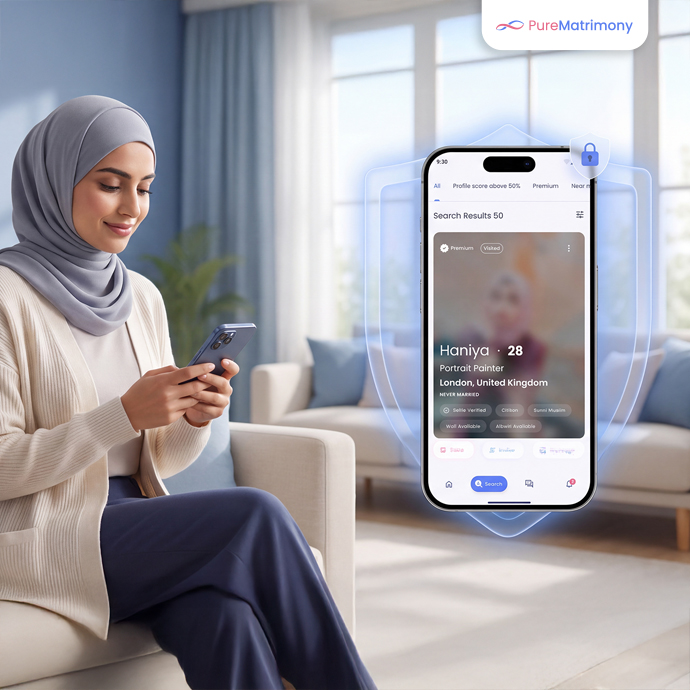
    Pure Matrimony gives members tools designed to reduce unnecessary exposure of personal content, particularly photographs and other sensitive information.

    One notable measure is protection against screenshots and screen recordings within sensitive areas containing photographs or videos.

    Attempts to capture those areas are designed to produce a blank image.

    This provides an additional layer of protection against someone easily copying and distributing a member’s photographs outside the platform.

    Members should still practise sensible privacy habits.

    Avoid placing highly sensitive information within your profile, such as:

    • Your full home address
    • Banking details
    • Passwords
    • Identification documents
    • Detailed financial information

    Privacy controls support safe matchmaking, but they work best alongside careful personal judgement.

    How Does Pure Matrimony Verify Member Profiles?

    Pure Matrimony may use profile information and identity verification processes to help establish profile authenticity and maintain account security.

    In certain circumstances, users may be asked to provide valid proof of identity.

    According to the privacy policy, identification documents requested for this purpose are retained only for the period required to complete the verification process.

    Profile verification can help reduce fake accounts and misrepresentation, but it should never be treated as a guarantee of someone’s character or suitability for marriage.

    Members should still verify important circumstances independently as conversations become serious.

    This can include:

    • Marital status
    • Employment
    • Family circumstances
    • Children
    • Location
    • Previous marriages
    • Relevant financial responsibilities

    Read More: How to Recognise a Fake Profile on a Muslim Marriage App

    How Does Pure Matrimony Protect Personal Information?

    Pure Matrimony states that it uses technical, organisational, and procedural security measures to safeguard member information.

    Its security measures include:

    • Encryption of sensitive information
    • Secure network infrastructure
    • Controlled staff access
    • Role based permissions
    • Security monitoring
    • Vulnerability assessments
    • Data minimisation
    • Staff data protection training
    • Incident response procedures

    Payment information is processed through external payment providers such as Stripe, Apple, and Google. Pure Matrimony states that it does not store or sell members’ financial details.

    The platform also says personal information is retained only for as long as necessary for the relevant purpose.

    Deleted or inactive account information is anonymised or securely removed according to its retention policy, subject to legitimate legal or operational requirements.

    What Role Does the Wali Feature Play in Member Safety?

    Wali involvement can introduce another level of accountability into the online marriage process.

    Where applicable, members can provide Wali details, allowing a Wali limited access to oversee relevant aspects of the matrimonial process.

    For practising Muslims, Wali involvement can help:

    • Maintain clearer boundaries
    • Provide an additional perspective
    • Reduce secrecy
    • Identify concerning behaviour
    • Support important marriage decisions

    While Wali involvement does not replace personal judgement, it can strengthen accountability.

    Read More: Pure Matrimony vs Relying on Family and Friends Alone

    What Should You Do If You Encounter a Suspicious Profile?

    Stop sharing personal information, preserve relevant evidence, and report suspicious behaviour through the platform rather than trying to investigate the person alone.

    Be particularly cautious if someone:

    • Provides contradictory information
    • Requests money
    • Pushes for private contact immediately
    • Refuses reasonable verification
    • Discourages family involvement
    • Pressures you emotionally
    • Becomes aggressive when questioned

    Do not send money or financial details to someone you meet through the platform.

    Privacy Is a Shared Responsibility

    Platform protections matter, but users also influence how safely their information is handled.

    Members should:

    1. Share personal information gradually.
    2. Use privacy controls carefully.
    3. Keep early conversations on the platform.
    4. Verify important claims.
    5. Involve trusted people.
    6. Avoid sharing financial information.
    7. Report suspicious behaviour promptly.

    Secure matchmaking works best when technology and responsible behaviour support each other.

    Build Your Marriage Search on Trust and Clarity

    Privacy should not be something you think about only after a problem occurs. 

    Feature like privacy controls, profile verification, moderation, and Wali involvement can help you search with greater confidence while protecting what matters. 

    If you are ready to search for a spouse in a more structured and privacy conscious environment, begin your journey with Pure Matrimony.  

    Final Thoughts

    Pure Matrimony approaches privacy and safety as an ongoing part of the matrimonial experience rather than a single feature.

    Its stated safeguards include profile verification, privacy controls, screenshot protection in sensitive areas, moderation, secure data handling, reporting systems, and user privacy rights.

    These measures can reduce certain risks, but no platform can guarantee that every member will always be honest or suitable.

    The strongest approach combines platform protection with personal responsibility.

  • Pure Matrimony vs Traditional Bureaus: Which Is Better?

    Pure Matrimony vs Traditional Bureaus: Which Is Better?

    Pure Matrimony and traditional matrimonial bureaus can both help Muslims find a spouse, but they offer very different levels of control, reach, privacy, and personal involvement.

    A matrimonial bureau usually relies on a matchmaker who collects profiles, recommends potential partners, and manages introductions. 

    Pure Matrimony allows members to search and communicate through a dedicated Muslim marriage platform, while retaining control over their preferences and pace.

    Neither route guarantees a successful marriage. The better option depends on your personality, support network, privacy needs, and preferred level of involvement.

    For many practising Muslims, the strongest approach may even combine both methods.

  • Pure Matrimony vs WhatsApp Rishta Groups: A Structured Alternative

    Pure Matrimony vs WhatsApp Rishta Groups: A Structured Alternative

    How Do WhatsApp Rishta Groups Work?

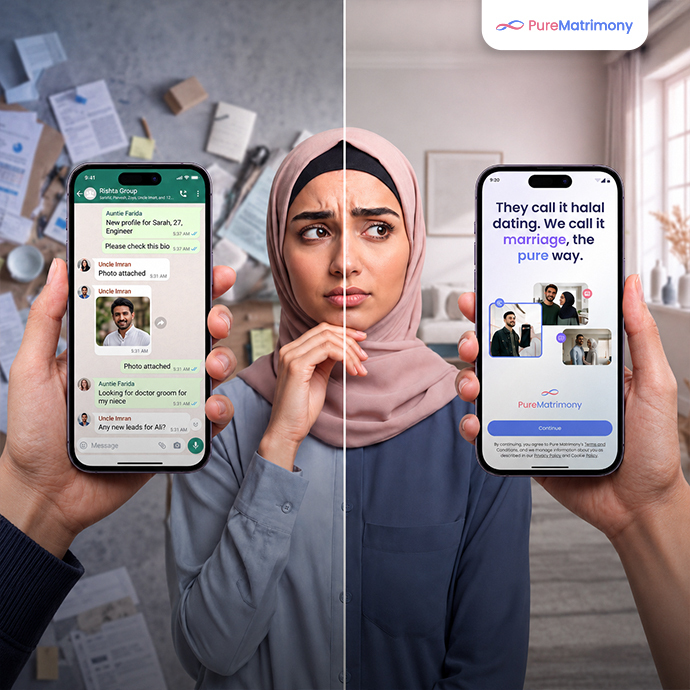
    WhatsApp rishta groups connect people through shared profiles posted in group chats.

    Typically, an administrator creates a group where members or family representatives share basic information about someone seeking marriage. Interested individuals then contact the relevant person privately to discuss compatibility.

    Many Muslims use these groups because they are:

    • Easy to join.
    • Free in many cases.
    • Community-driven.
    • Managed by local volunteers or trusted individuals.

    For some people, they have successfully led to marriages. However, every group operates differently, and there is rarely a standard process for profile verification, privacy, or moderation.

    Why Do Muslims Use WhatsApp Rishta Groups?

    Many practising Muslims appreciate the familiarity and sense of community in WhatsApp groups.

    Some common reasons include:

    • Recommendations from family or friends.
    • Local community connections.
    • Simplicity and convenience.
    • Quick introductions.
    • Cultural familiarity.

    For families who already know one another, this informal approach may feel comfortable and effective.

    What Are the Disadvantages of WhatsApp Rishta Groups?

    The biggest challenge is inconsistency. Every group has different rules, standards, and levels of moderation.

    Potential limitations include:

    • Limited profile information.
    • Little or no profile verification.
    • Large numbers of inactive members.
    • Repeated forwarding of personal details.
    • Reduced privacy in matchmaking.
    • Difficulty filtering compatibility preferences.
    • Conversations moving outside the original group without structure.

    This does not mean every WhatsApp group is unsafe. Many are managed responsibly. However, users should always be cautious when sharing personal information online and verify details before progressing any marriage discussions.

    Why Is Pure Matrimony Different?

    Pure Matrimony is designed specifically for practising Muslims seeking marriage through a structured and Deen-centred process.

    Rather than relying on group messages, users create detailed profiles that help others understand their background, practising level, and marriage intentions.

    Features commonly associated with a structured matchmaking platform include:

    • Dedicated marriage profiles.
    • Compatibility preferences.
    • Organised matrimonial process.
    • Privacy settings.
    • Wali involvement
    • Purposeful matchmaking.
    • Marriage-focused community.
    • Genuine marriage proposals from people actively seeking marriage.

    This allows members to spend less time sorting through unsuitable introductions and more time focusing on meaningful compatibility.

    Profile Verification and Privacy Matter

    Trust is one of the most important parts of online matrimony.

    When searching for a spouse online, many practising Muslims understandably want reassurance that the information they are viewing is genuine.

    A safe matrimonial platform can help by offering features such as profile verification processes, moderation, and privacy controls that are not typically available in informal messaging groups.

    No online platform can remove every risk, but having clear processes can help members make more informed decisions.

    The Importance of Serious Marriage Intentions

    Finding someone who genuinely wants marriage is often more important than simply finding more people.

    One challenge with informal introductions is that intentions are not always clear.

    On a dedicated marriage platform, members generally join with one purpose: finding a compatible spouse.

    This creates an environment that encourages:

    • Serious marriage seekers.
    • Respectful communication.
    • Long-term compatibility.
    • Clear marriage intentions.

    For practising Muslims, this focus can make the search feel more purposeful.

    Pure Matrimony vs WhatsApp Rishta Groups


    Feature WhatsApp Rishta Groups Pure Matrimony
    Purpose Community introductions Dedicated marriage platforms
    Profiles Basic shared messages Structured matrimonial profiles
    Compatibility preferences  Usually limited Detailed filtering options
    Privacy Depends on each group Privacy controls within the platform
    Profile verification Varies by group Verification processes where applicable
    Marriage intentions Can vary Marriage-focused community
    Search experience Manual browsing Organised matrimonial platform


    Is Online Muslim Matrimony Halal?

    Yes, online Muslim matrimony can be halal when it is used with the correct intentions and within Islamic guidelines.

    The platform itself is simply a means of introduction.

    What matters is how it is used.

    Practising Muslims should:

    • Keep conversations respectful.
    • Involve family or a Wali where appropriate.
    • Maintain Islamic boundaries.
    • Focus on compatibility rather than casual interaction.
    • Seek marriage sincerely rather than entertainment.

    Technology can facilitate introductions, but Islamic principles should always guide the process.

    Which Option Is Right for You?

    There is no single approach that suits everyone.

    WhatsApp rishta groups may work well for people seeking introductions within their existing community.

    However, if you prefer greater organisation, detailed compatibility preferences, stronger privacy controls, and an environment designed specifically for practising Muslims, a platform like Pure Matrimony offers a more structured approach to finding a spouse.

    The important thing is not simply where you search.

    It is that your search reflects your values, your intentions, and your trust in Allah.

    Looking for a More Structured Way to Find Your Spouse?

    Finding a spouse should feel purposeful rather than overwhelming. 

    If you value privacy, compatibility, and a marriage-focused environment rooted in Islamic principles, Pure Matrimony provides a structured way to connect with practising Muslims who share your intention of building a lasting marriage. 

    Begin your search with confidence, sincerity, and trust in Allah’s plan.