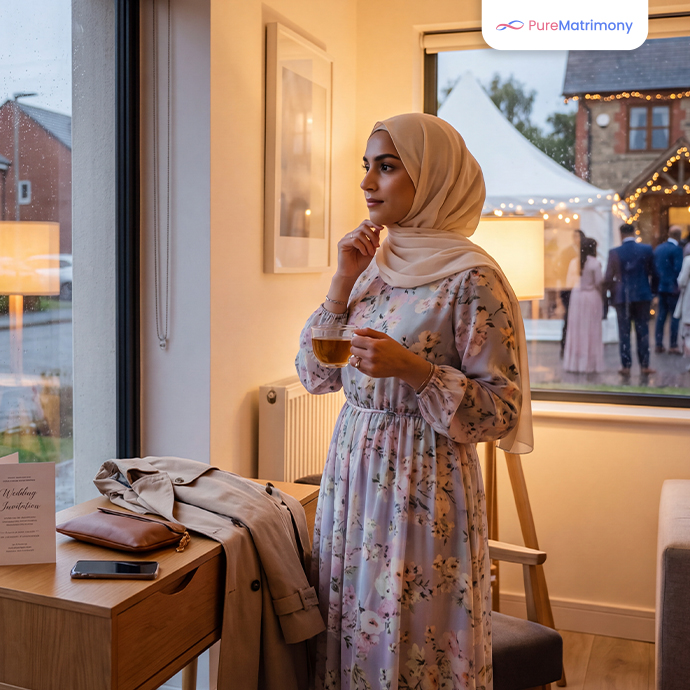
1. Family Still Matters, But Personal Choice Matters More
Modern Muslims in the UK continue to value family involvement, yet they are also taking a more active role in choosing their spouse.
For generations, family networks have played an important role in Muslim marriages.
Parents, relatives, and community members often helped identify potential spouses, provided guidance, and supported couples throughout the process.
However, the role of family is changing.
Many Muslims now want their families involved as a source of support rather than as the only decision-makers.
They want to consider questions such as:
- Do we share similar values?
- Are our expectations for married life compatible?
- Do we understand each other’s goals?
- Can we build a life together?
This does not mean family involvement is becoming less important.
Instead, many Muslims are finding a balance where families offer wisdom and support, while individuals take responsibility for making a thoughtful decision.
Modern marriage culture in the UK is moving towards partnership between generations.
2. Culture Shapes the Wedding, Not Necessarily the Marriage
Muslim weddings in the UK often reflect cultural traditions, but the foundation of a successful marriage is built on values, character, and shared understanding.
British Muslim weddings can look very different depending on family background and heritage.
Some celebrations may include:
- Traditional clothing
- Cultural foods
- Regional customs
- Large family gatherings
- Community celebrations
These traditions often hold emotional importance because they connect couples with their heritage.
However, the wedding celebration itself does not always represent everything that matters in married life.
The distinction is becoming important for many Muslims.
A wedding is a single day.
Marriage is a lifelong relationship.
As British Muslim communities continue to grow, many couples are becoming more conscious of separating traditions from expectations that may not reflect their actual priorities.
3. Compatibility Is Becoming More Important in Choosing a Spouse
Modern trends show that compatibility is becoming a central consideration when choosing a spouse.
Compatibility can include:
- Communication styles
- Family expectations
- Financial responsibilities
- Career plans
- Parenting views
- Lifestyle choices
- Personal goals
It does not mean expecting perfection from a potential spouse.
Rather, it means understanding that marriage involves two individuals with different experiences, personalities, and responsibilities.
Many Muslims today are asking deeper questions before marriage:
Can we support each other’s growth?
Do we approach challenges differently but respectfully?
Are our expectations realistic?
The shift shows that finding a spouse is not only about meeting certain criteria.
It is about finding someone with whom you can build a stable and meaningful future.
4. Modern Weddings Don’t Necessarily Mean Modernising Marriage Values
Changing wedding styles do not necessarily mean changing the Islamic values that guide Muslim marriage.
Many Muslims continue to prioritise:
- Commitment
- Family responsibility
- Religious principles
- Mutual respect
- Long-term partnership
The way people celebrate marriage may change over time.
Venues may change.
Wedding formats may change.
How couples meet may change.
But the foundations many Muslims seek in marriage remain consistent.
5. The Way Muslims Find a Spouse Is Changing Too
One of the biggest changes in modern marriage culture is how Muslims find potential spouses.
Traditionally, many Muslims relied heavily on family networks, community connections, and local introductions.
These routes remain valuable.
However, modern lifestyles have changed how people connect.
Many Muslims today:
- Move away from their hometowns
- Study or work in different cities
- Have smaller community networks
- Have fewer opportunities for traditional introductions
As a result, some Muslims are exploring additional routes, including online matchmaking, to find potential spouses who share their values and marriage goals.
The growth of matrimonial apps does not replace family involvement or traditional approaches.
Instead, it reflects a changing reality.
The way people search may evolve, but the purpose remains the same: finding someone suitable for marriage.
For practising Muslims, the important consideration is whether the method supports serious intentions and a marriage-focused approach.
Read More: Myth vs Truth: Is Using an App to Find a Spouse Un-Islamic?
Build Your Marriage Search Around What Matters
Wedding season often reminds people of the importance of marriage, but the journey begins long before the celebration.
Finding the right spouse requires clarity about your values, expectations, and the type of future you want to build.
Pure Matrimony is built to help serious marriage seekers explore compatible matches in a Shariah-compliant environment.
Begin Your Search with Purpose and Understanding
Conclusion
Modern Muslim marriage culture in the UK reflects both continuity and change.
Families remain important.
Islamic values remain central.
Cultural traditions continue to bring communities together.
But individuals are also becoming more thoughtful about compatibility, expectations, and the process of finding a spouse.
UK wedding season offers a reminder that marriage is not defined only by how a wedding looks.
It is defined by the foundation that two people build together afterwards.
Leave a Reply