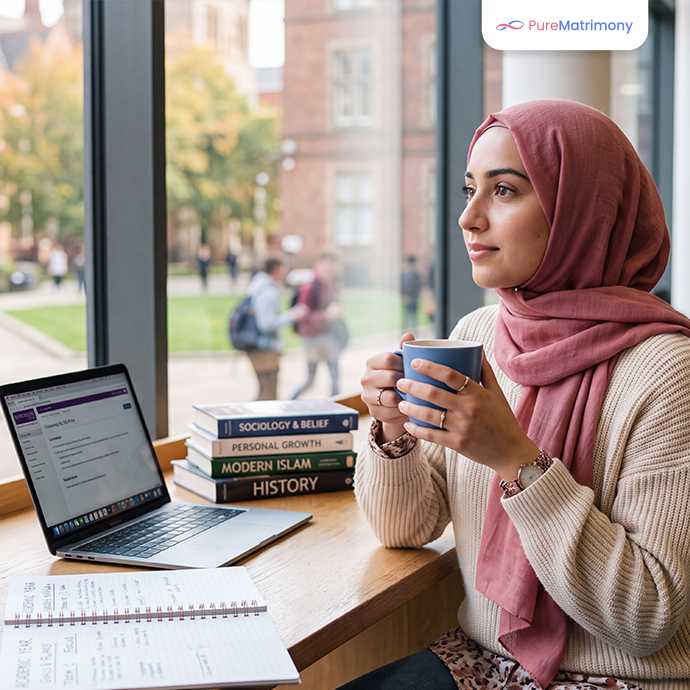
How Do Life Transitions Influence Marriage Readiness?
Life transitions influence marriage readiness by revealing how someone handles responsibility, uncertainty, changing routines, and future planning.
Marriage readiness is not measured only by age or income. It is also reflected in how you respond when circumstances change.
A new academic year or career milestone may test your ability to:
- Manage time effectively
- Make independent decisions
- Handle financial pressure
- Adapt to unfamiliar environments
- Maintain Islamic practice during busy periods
- Communicate needs clearly
- Plan beyond the immediate future
These experiences can expose areas that need improvement while also showing how much you have already grown.
Someone who learns to balance study, work, worship, and family responsibilities may begin to recognise that they are capable of considering another major commitment.
Can a New Academic Year Be a Good Time to Consider Marriage?
Yes. A new academic year can be a useful time to consider marriage because it naturally encourages reflection, planning, and clearer routines.
August, September, and the months surrounding them often feel like a fresh beginning. Students return to university, graduates start new roles, and professionals review their goals after summer.
This does not mean you must begin searching immediately.
It means the transition can prompt useful questions:
- What do I want my life to look like in three years?
- Am I emotionally ready to share responsibility?
- Could marriage support my goals rather than interrupt them?
- What kind of spouse would understand my current commitments?
- Am I prepared to make consistent time for a marriage search?
A new beginning can provide momentum, but the decision should still be based on readiness rather than seasonal emotion.
Should Single Muslims Delay Marriage During University?
Singles do not automatically need to delay marriage because they are studying, but they should consider whether they can manage both commitments responsibly.
University can be demanding. Coursework, exams, placements, travel, and financial pressures all require attention.
However, study and marriage are not always competing goals.
A supportive marriage may provide emotional stability, companionship, and shared purpose. Many couples continue studying after Nikah and build their future together.
Before progressing, discuss:
- Study schedules
- Financial support
- Living arrangements
- Career plans after graduation
- Time available for one another
- Family expectations
- Whether relocation may be required
Allah encourages believers to facilitate marriage and not allow fear of financial uncertainty to become an unnecessary obstacle. In Surah An-Nur, Allah says:
“Marry the unmarried among you and the righteous among your male and female servants. If they are poor, Allah will enrich them from His bounty.” Surah An-Nur, 24:32.
Trust in Allah should be combined with practical planning. Marriage during university can work, but vague expectations and poor communication can create avoidable pressure.
Should Marriage Be Delayed During a Career Change?
A career change may justify careful planning, but it does not always require postponing marriage until every professional goal is complete.
Many singles believe they must reach a perfect level of career stability before looking for a spouse.
The problem is that careers are rarely completely settled.
A person may finish university, begin professional training, change industries, receive a promotion, or move to another city. Waiting for life to stop changing can result in an indefinite delay.
A better question is:
Can I explain my current situation honestly and build a realistic plan with another person?
Career uncertainty may be manageable when both people understand:
- Current income
- Future qualifications
- Possible relocation
- Expected working hours
- Financial priorities
- Family responsibilities
- Long-term ambitions
Marriage does not require a completed life plan. It requires honesty, cooperation, and the ability to adjust together.
How Can University and Career Changes Support Personal Growth?
University and career transitions can strengthen qualities that are essential for a healthy Muslim marriage.
New environments often require people to become more disciplined and self-aware.
You may develop:
Greater independence
Managing your own routine, money, and responsibilities can prepare you for shared adult life.
Better communication
Working with lecturers, employers, colleagues, and different personalities can improve your ability to express concerns and resolve misunderstandings.
Clearer priorities
Experiencing new opportunities may reveal which goals genuinely matter and which expectations came from social pressure.
Stronger emotional maturity
Handling setbacks, rejection, difficult deadlines, or uncertain outcomes can build patience and resilience.
More realistic expectations
Life experience often replaces idealised ideas about marriage with a more balanced understanding of partnership and responsibility.
Personal growth does not guarantee marriage readiness, but it gives you stronger foundations from which to assess it.
How Do Life Transitions Clarify What You Need in a Spouse?
Major changes often reveal which forms of compatibility matter most in everyday life.
You may once have focused mainly on education, profession, appearance, or cultural background.
A demanding academic or professional period may show you that other qualities matter just as much.
You may begin to value someone who:
- Respects your commitments
- Communicates calmly
- Supports personal growth
- Understands changing routines
- Shares your religious priorities
- Plans responsibly
- Handles uncertainty with patience
- Is willing to build gradually
Allah describes marriage as a source of tranquillity, affection, and mercy in Surah Ar-Rum, 30:21.
This guidance reminds practising Muslims that a spouse should not simply fit a checklist. They should be someone with whom a stable, compassionate, and responsible life can be built.
How Can Single Muslims Balance the Spouse Search with Busy Schedules?
A successful spouse search requires consistency rather than unlimited free time.
You do not need to spend hours every day looking for someone.
Instead:
- Set aside one or two focused periods each week
- Keep your profile honest
- Ask essential questions early
- Avoid prolonged conversations without direction
- Involve family or a Wali when appropriate
- Pause unsuitable conversations respectfully
- Protect your study and work responsibilities
- Review your expectations regularly
Purposeful searching prevents marriage from becoming either an obsession or an indefinite future goal.
Read More: For Busy Muslim Professionals: Why You Don’t Have to Choose Between Career and Marriage
Signs a Transition May Not Be the Right Time to Search
A life transition may not be the best time to start searching if you are overwhelmed, emotionally unstable, or unable to make space for a serious commitment.
Consider waiting if:
- You are struggling to manage basic responsibilities
- Your immediate future is completely uncertain
- You want marriage mainly to escape stress
- You cannot communicate your plans honestly
- You are experiencing unresolved emotional difficulties
- You have no time for meaningful conversations
- You feel pressured by relatives or peers
Delaying briefly to regain stability is different from waiting for perfect circumstances.
The goal is thoughtful preparation, not endless postponement.
Begin Your Next Chapter with Purpose
Life transitions can bring uncertainty, but they can also create the clarity needed to make meaningful decisions.
Pure Matrimony helps practising Muslims explore marriage through a focused environment built around serious intentions, compatibility, privacy, and purposeful introductions.
Begin your search when you are ready to make space for commitment, not when every part of life has become perfect.
Final Thoughts
A new academic year, career milestone, or major life change can reshape how singles think about marriage.
These transitions reveal priorities. They test discipline. They encourage reflection about the future.
You do not need to delay marriage simply because your life is changing. You also do not need to begin searching merely because a new chapter has started.
Consider your readiness honestly.
Can you communicate well? Can you manage responsibility? Can you explain your plans? Can you make room for another person while continuing to grow?
Marriage is not separate from personal development.
For many practising Muslims, it becomes part of that development, a lifelong partnership in which Deen, ambitions, and responsibilities continue evolving together.
Leave a Reply